
About
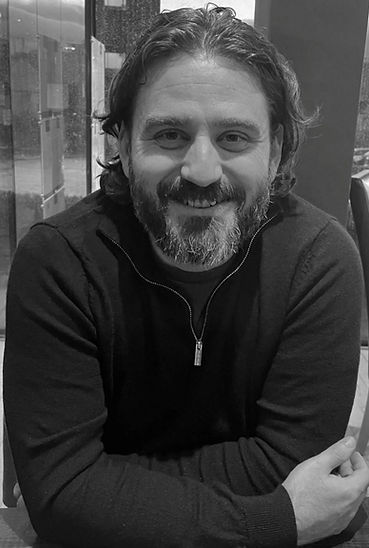
Hello, I'm Martin
I'm a Cognitive Behavioural Hypnotherapist (CBH) supporting people struggling with anxiety, worry, or stress in person in Leicester, Hinckley and Nuneaton or UK-wide online.
"My Philosophy: A Safe Space to Be Heard"
My aim centres on creating a safe, accepting, and non-judgemental space where you feel comfortable sharing your story. We work together to understand and explore the challenges you face, their significance and meaning to you, and ways you can make lasting change in your life.
Beyond my private practice, I volunteer with Cruse Bereavement, one of the UK's leading bereavement charities, supporting people through grief by phone and online.
My Qualifications
I trained at one of the UK's most respected hypnotherapy colleges, under some of the field's leading academics, and I'm registered with a professional body that holds me to ethical standards.
If you're interested in the details...
I completed my training in Hypno-CBT® through the UK College of Hypnosis and Hypnotherapy. The college's approach is deeply rooted in evidence-based practice, shaped by some of the most influential figures in modern psychotherapy:
-
Dr. Donald Meichenbaum PhD: The college's Senior Advisory Board is headed by Dr. Meichenbaum, a founding figure of Cognitive Behavioural Therapy. His focus on actively changing internal narratives and building resilience is central to how I work with clients today.
-
Mark R. Davis: Hypno-CBT® was developed by the college's principal, Mark R. Davis, who also brought Andrew Salter's foundational 1949 text, Conditioned Reflex Therapy, back into print for modern practitioners.
-
Daniel Mirea: The board includes Daniel Mirea, the originator of NeuroAffective-CBT and a leading authority in shame-focused and self-esteem work.
-
Dr. Assen Alladin & Prof. E. Thomas Dowd: The academic framework is further informed by these internationally recognised authorities in cognitive behavioural hypnotherapy.
I am a member of the NCIP [REG. Number 362620] and follow their code of ethics.

"Think of anxiety as 'Negative Self-Hypnosis'. You are already using your imagination—just against yourself. Lets work to help you flip that skill to work for you."
Cognitive Behavioural Therapy (CBT)
Cognitive Behavioural Therapy (CBT) is widely regarded as the most evidence-based form of psychological therapy available today. It is not a single technique but a diverse tradition comprising many approaches (such as ACT or REBT).
The Core Principles
CBT is a structured skill-based approach that focuses on the "here and now" of your current situation. It is your thoughts (cognitions) which determine, to a significant degree, how you respond to things. It is typically your interpretation of an event, rather than the event itself, that causes your distress.
Our work together is a collaborative process. We work as a team to understand your vicious cycle, in which unhelpful thoughts lead to painful feelings and unhelpful actions, which then reinforce the initial negative thoughts. You are encouraged to learn to identify these thought patterns, test them, and acquire the coping skills necessary to become your own therapist to ensure changes you make last longer after our 1-1 support has finished. Hypnotherapy and Mindfulness are fully integrated to support this process. See my blog posts here and here for an example of how this might work in practice.
Hypnotherapy
Hypnotherapy is the clinical application of hypnosis and is used to support and help bring about change in your thoughts, feelings and behaviours.
Hypnosis is, at its core, a state of heightened responsiveness to suggestion. This is achieved by using your own ability to focus your attention, use your imagination and being open to the positive things being suggested to you.
In theory anyone can use the skills of hypnosis and it is something that can be learned with or with the guidance of a therapist. The way I like to explain this is to ask “have you ever got hooked on a negative thought…” and “has that thought then maybe spiraled to more negative thinking, triggered anxious feelings, led to you imagining worse case scenarios or reliving past events?”
We can see this as a type of Negative Self-Hypnosis - your attention and imagination being focused on negative ideas or negative self-suggestions - which in turn has an impact on your thoughts, feelings and actions. Now, we flip this on its head and use that skill you already have, which you may be very well practiced at, but focus it on realistic, beneficial changes, imaging facing situations in new and more positive ways, with positive self-suggestions, about how you think, feel and act. See my blog post here discussing what hypnosis looks like in practice inclusing a free audio recording.
Mindfulness
At the heart of mindfulness is developing a frame of mind that is open and accepting rather than judgmental or reactive.
Sometimes we can get hooked on our thoughts, whether that’s worrying about something that has happened or fearing something that might happen. The thoughts can feel intense, real and impact our feelings, the physical sensation of our bodies, and socially in the way we respond to others around us.
By practicing mindfulness, you learn active acceptance. This means allowing unpleasant feelings (like anxiety or tension) to come and go freely, letting go completely of any struggle against them or attempts to suppress them. By creating distance between you and your thoughts you will learn to step back, become more self-aware and able to stay in the present moment.
The powerful negative thoughts you experience, like constant worrying or fearing the future, can be thought of as a kind of unwanted ‘Negative Self-Hypnosis' that locks your attention down. Mindfulness therefore can be viewed as acting as 'de-hypnosis', helping you break that spell and consciously choose how to respond. See my blog post here for a free audio recording.